WORK · LEAGUECOIN
SEEKING PARTNERSLeagueCoin
A sports market for athlete performance. Every athlete across six leagues has a token whose price follows what they do on the field. A machine-learning model sets the price, and a person reviews the calls it’s unsure of. It is built for adults. Its public site is offline today while we look for partners who can help fund the data-licensing and state-by-state regulatory fees it takes to bring it back online.
LeagueCoin’s public site is offline. Nothing on this page is an offer to buy or sell anything.
- ROLE
- Studio: concept, data, model, platform
- SURFACES
- Web app, API, real-time feed, review desk
- SCOPE
- Data pipeline → model → API → interface, end to end
- STATUS
- Public site offline; platform, data, and model intact
What we built
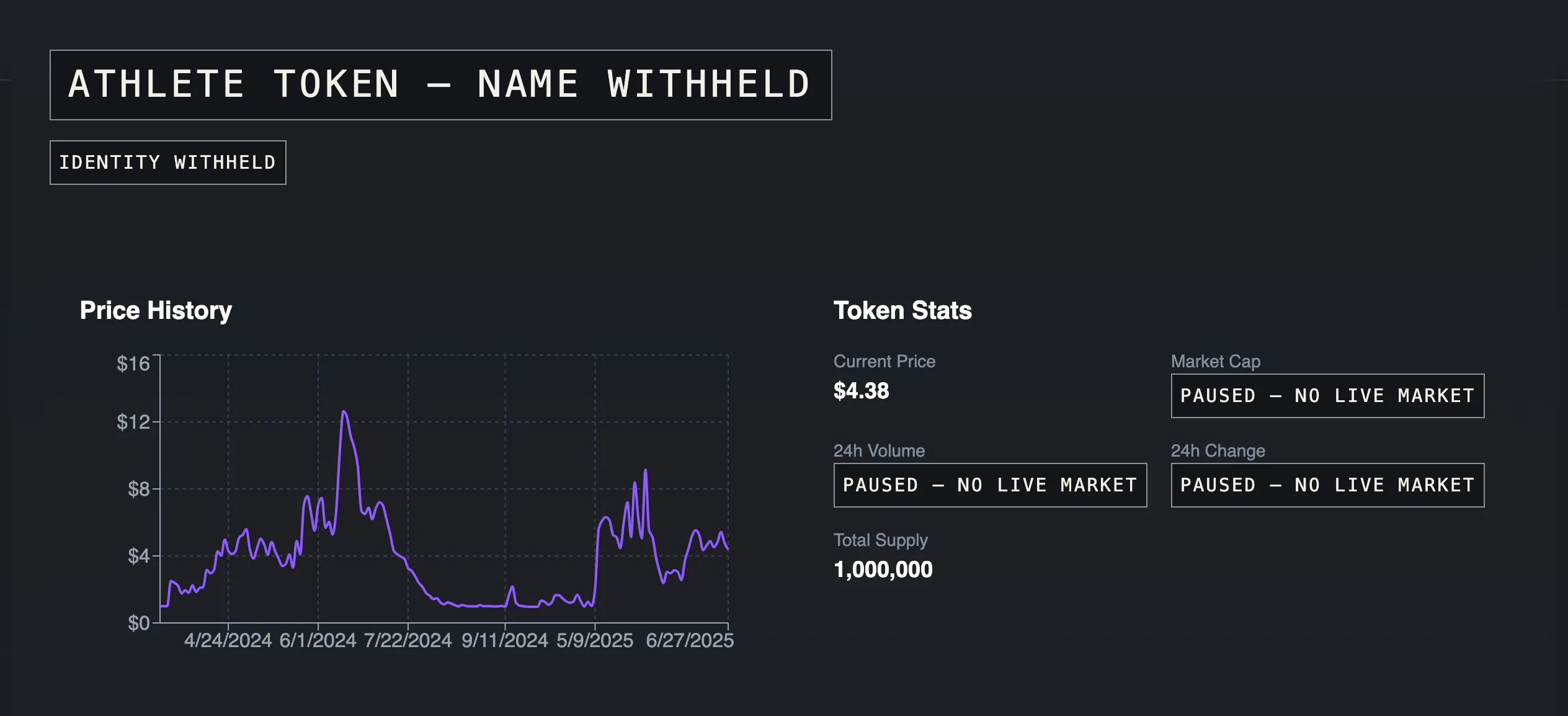
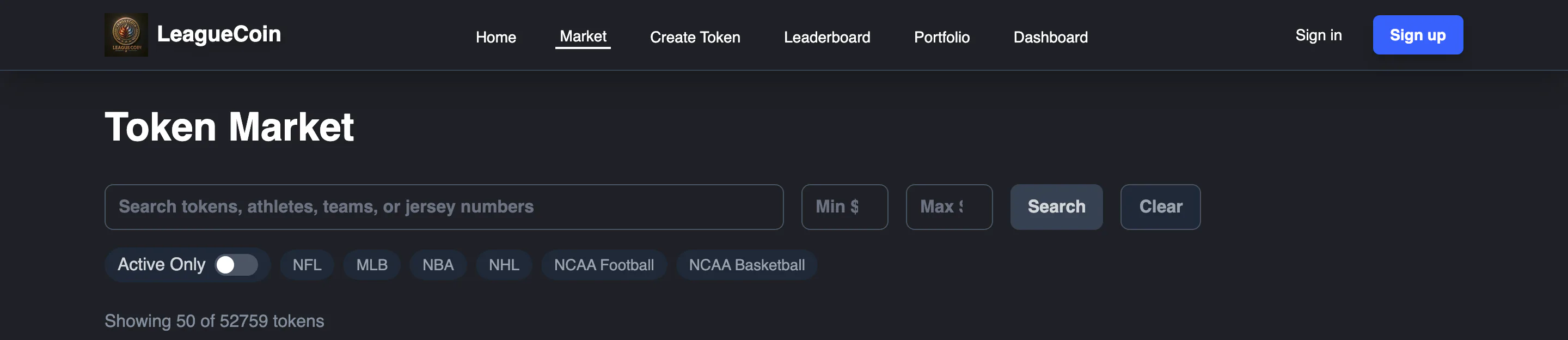
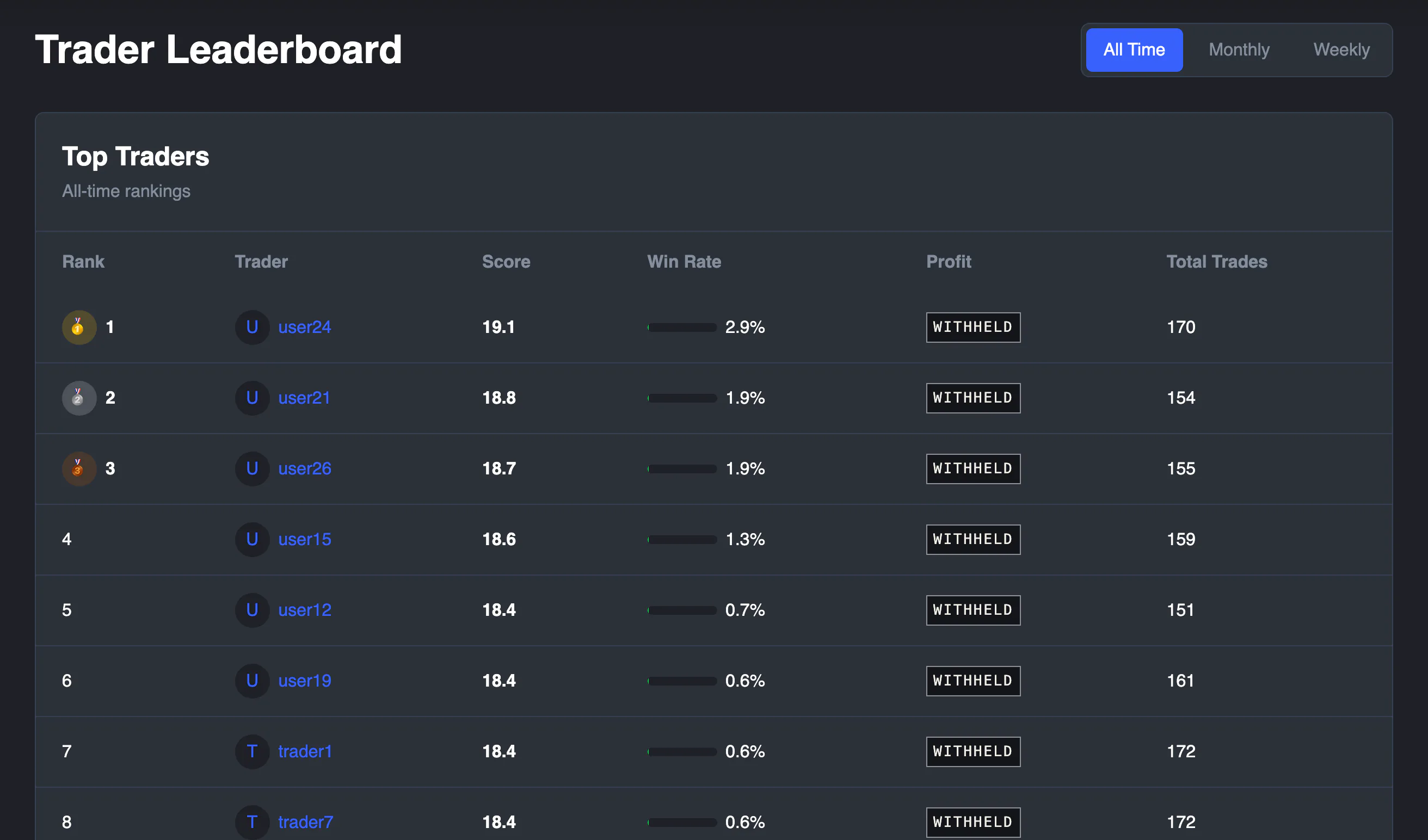
Sport already runs on numbers: box scores, fantasy points, draft boards. LeagueCoin gave those numbers a price that moves, and asked whether a model could set that price honestly enough for people to trust it. The result is a full platform, built by the studio: accounts, portfolios, an order book, real-time prices and an admin desk. It covers the NFL, NBA, MLB, NHL, and college football and basketball.
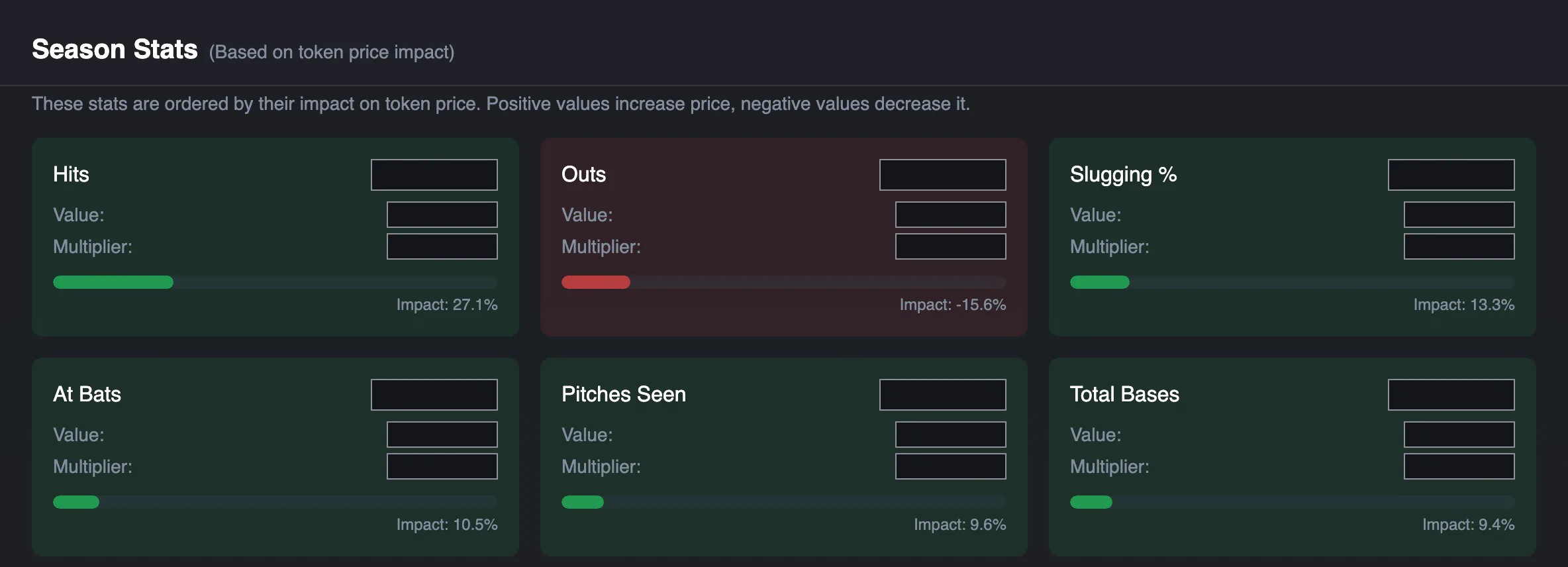
Pricing started as a formula and became a learned model. It is a per-game transformer that gives every athlete a price and a confidence score. When the model is unsure, it doesn’t publish. The call goes to a human review queue, and each decision feeds the next training run. Every price shows which statistics moved it and by how much. Underneath sit an API service, price updates over WebSockets, a web front end, and a token layer with prototyped contracts, kept off-chain because the regulatory ground wasn’t firm. We built the market we could defend, not the one that demoed best.
How it works
What we don’t show
No token economics, no athlete likenesses or names, and no live market figures. The public site is offline and a review of the rights involved is still pending, so this page shows how it was built, not the market itself.
Questions about the build are welcome.